• Vergroot lettergrootte
  • Standaard lettergrootte
  • Verklein lettergrootte
www.eenblogjeom.nl
Lean-transformatie-risico's volgens Karen Martin
Gepubliceerd in Lean Six Sigma
E-mail Afdrukken


Karen Martin beschrijft in haar boek The Outstanding Organization de link tussen het Dunning-Kruger effect en het risico op het toepassen van iets-in-name-only (bijv. Lean, Prince2 of Agile), waarbij je alleen de 'vormen' toepast en niet de 'functies':

dunning kruger effect dunning-krugereffect

Missing the Trees for the Forest

In many of the organizations with which I've worked, I've noticed that managers and workers simply don't see the chaos or the causes of chaos around them. The types of behaviors that result in chaos usually are not purposeful, but in many cases they have become habitual—which makes them all the more damaging to an organization striving to be outstanding. Habits are nearly invisible. You engage in them without realizing they are there. And you can look at another organization that is succeeding and not notice the real differences between how that outstanding organization behaves and how your organization behaves. When looking at outstanding organizations, you may miss the important trees and just see the forest.

This type of blind spot is similar to what is known as the Dunning-Kruger effect, after the two psychologists who described it. Basically, the Dunning-Kruger effect notes that people who are truly incompetent don't know that they are incompetent.'

They lack the knowledge that allows them to understand the difference between competence and incompetence. If you apply this concept to the world of organizational performance, you begin to understand why organizations often adopt improvement tools and isolated components of holistic improvement philosophies but consistently fail to see the things that truly make a difference in performance.

My colleague Tim Ogden introduced me to the work of economist Lant Pritchett, who describes this process as isomorphic mimicry, a phrase that means the copying of forms rather than functions. It's similar to, for instance, non-venomous snakes that have evolved to look like their poisonous cousins. These pretenders will fool you if you don't look too closely, but they can't execute when it really matters. Pritchett uses it to explain why so many years of work by high-powered consultants and billions of dollars of aid to developing countries hasn't produced well-functioning government institutions. These efforts often have been focused on getting the governments to mimic the government institutions in developed countries as they exist today. But these institutions usually developed and changed over a long period of time and work only because of the behaviors, capabilities, culture, and habits that developed. Copying these institutions in their current form, without the history, culture, knowledge, experience, and habits that underlie them, produces tepid results at best. The institutions just don't function, even though they look identical to the functioning institutions in developed countries on paper.

Bron: The Outstanding Organization, Generate Business Results by Eliminating Chaos and Building the Foundation for Everyday Excellence - Karen Martin

Tags:
Laatst aangepast op zaterdag, 30 mei 2020 09:34  
Learning Experience Design (LXD) volgens Connie Malamed
Gepubliceerd in Bluff Your Way Into
E-mail Afdrukken

leren learn

Connie - the eLearning coach - Malamed geeft in het artikel 10 Principles of Learning Experience Design aan waar de term 'Learning Experience Design' vandaan komt, wát het is, en welke 'principes' als cruciale richtlijnen fungeren om effectieve leerervaringen te ontwerpen en ontwikkelen:

conny malamed instructional design lxd learning experience design

How did the term learning experience design (LXD) originate and what does it mean? In a search through academic databases, I found a mention of the phrase in an Educational Technology article from 2002 (McLellan, 2002). The author, Hillary McLelllan, explains how to apply the art of designing experiences to education and training. She discusses the importance of intentionally shaping the experience so that the learner leaves with something to remember.

Nearly two decades later, we are still exploring how to best shape experiences that help people learn. In the midst of this era of discovery, some principles have solidified and are now considered best practices. Perhaps learning experience design is the embodiment of what is best and most effective from the merging of instructional design and the many disciplines in its Venn diagram. This is not a new label to be pasted on old methods, but a new definition for an evolved mindset, improved practices and a broader perspective.

(...)

1. LXD recognizes that training is not always the solution.
2. LXD is human-centered.
3. LXD insists on inclusive design.
4. LXD seeks to create a positive and meaningful user experience.
5. LXD emphasizes that learning is a journey.
6. LXD relies on research-based findings to make design decisions.
7. LXD seeks input from users and participants.
8. LXD uses real-world metrics to measure performance improvement.
9. LXD recognizes the value of sharing and social engagement.
10. LXD is innovative and flexible.

Bron: 10 Principles of Learning Experience Design, Conny Malamed


Laatst aangepast op dinsdag, 05 januari 2021 08:26  
Falend succes, vluchtig falen
Gepubliceerd in Citaten: dromen, durven doen
E-mail Afdrukken

citaat

Success is never permanent, and failure is never final.

Mike Ditka

Laatst aangepast op maandag, 02 april 2012 19:28  
Begin met het einde voor ogen
Gepubliceerd in Citaten
E-mail Afdrukken

citaat

You've got to think about big things while you're doing small things, so that all the small things go in the right direction.

Alvin Toffler


Laatst aangepast op maandag, 18 april 2011 18:30  
Veranderen volgens Deepak Chopra
Gepubliceerd in Citaten: verandermanagement
E-mail Afdrukken

citaat

All great changes are preceded by chaos.

Deepak Chopra

Laatst aangepast op zaterdag, 06 oktober 2012 06:12  


JPAGE_CURRENT_OF_TOTAL

Be not afraid of going slowly, be afraid only of standing still.

Chinese gezegde

Banner

Archief

Lean boeken top 5

(maart 2016)
Banner
Banner
Banner
Banner
Banner

We hebben 115 gasten online
Artikelen

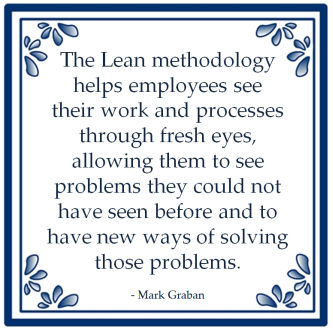
lean mark graban fresh eyes solving problems

Banner
Banner

creative acts for curious people

Creative Acts for Curious People
How to Think, Create, and Lead in Unconventional Ways
Sarah Stein Greenberg

Bij Bol.com | Managementboek


Lean boekentips

Banner